
- Este evento ha pasado.
QTECNOS II

About QTECNOS
The Quantum Technology Education Consortium between Norway, South America and Cuba (QTECNOS) is a programme to improve the current situation with education in quantum technology, both in Norway and the Global South. The specific focus is on understanding physics and mastering quantum materials fabrication employing both computational and experimental methods, laying the foundation for educating students in this field.
The consortium was established in 2022 by the University of Oslo in Norway and four partners from the Global South, namely the Universidad del Valle (Colombia), the Association of Colombian State Universities of the Caribbean (SEU-Caribe) (Colombia), the Universidad Nacional Mayor de San Marcos (Peru) and the University of Havana (Cuba).
The second International Workshop QTECNOS was held in Cartagena, Colombia, November 25 – 29th, 2024.
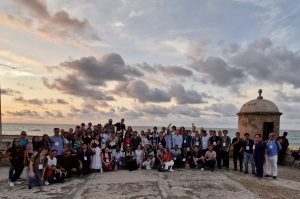
About the NANO & QUANTUM WORKSHOP 2024
Quantum technology education is a novel multi-disciplinary field predicted to revolutionize the future of the world. The understanding of physics and the mastering of quantum materials fabrication constitute the foundation for education in this field. In this sense, the second edition of this workshop is designed to provide students and researchers short courses and lectures with an overview of current research topics in nanoscale and quantum science, including (but not limited to) nanophysics, materials engineering, photonics and quantum technology.

Workshop Program
Book of Abstracts
Program and Scientific Committee
Prof. Diana Nathalie Montenegro Martínez, Universidad del Atlántico – Colombia
Prof. Luis Eduardo Cortés, Universidad de Cartagena – Colombia
Prof. Ángela Guzmán, Profesora Emérita de Universidad Nacional de Colombia y Directora del
Capítulo Caribe de la Academia Colombiana de Ciencias Exactas, Físicas y Naturales – Colombia
Prof. Andrej Kuznetsov, University of Oslo – Norway
Dr. David Rivas Góngora, University of Oslo – Norway
Prof. Pablo Hector Rivera, Universidad Nacional Mayor de San Marcos – Perú
Prof. John H. Reina, Universidad del Valle – Colombia
Speakers

Prof. Morten Hjorth-Jensen
Department of Physics and Astronomy and Facility for Rare Isotope Beams, Michigan State University, USA
Department of Physics and Center for Computing in Science Education, University of Oslo, Norway
Theoretical physicist with a strong interest in computational physics and many-body theory in general, and the nuclear many-body problem and nuclear structure problems in particular. Strong interest in computational physics as well as computational aspects of quantum mechanical methods ranging from traditional many-body methods to quantum computing and machine learning.
Prof. Juan Carlos Gonzalez (JC)
Laboratory of Ceramics and Nanomaterials, Physics Research Institute, San Marcos National University, Lima – Peru.
Experimental Physicist, Ph.D. in Materials Science from Materials Science Institute of Barcelona (CSIC) – Universitat Autònoma de Barcelona (Spain). His research interests are applications of superconducting materials. In particular, he is working on Josephson junctions onto textured YBCO films. He is also interested on transport measurements of constrictions in metallic and semiconducting films.
Prof. Diana Nathalie Montenegro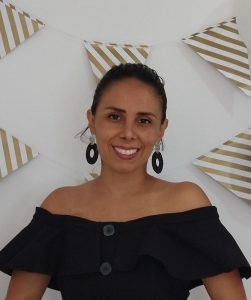
Faculty of Natural Sciences, University of Atlántico, Barranquilla, Colombia.
Experimental Physicist with a Ph.D. in Physics from the University of Valencia (Spain). Her research interests are centered on the controlled modification of the structure and composition of matter, with the aim of developing materials at nanometer scale with novel technological applications. Over the course of several years, she has been focused on the study of oxide semiconductor nanostructures for electronic and optoelectronic applications. However, in recent times, her focus has shifted towards the exploration of materials and synthesis methods for green technology, which is defined as an advanced technology that has minimal or no adverse impact on the environment.
 Prof. Joakim Bergli
Department of Physics and Center for Computing in Science Education, University of Oslo, Norway
His research interests are on theoretical solid state physics. In particular, he has been working on Quantum transport, Quantum information theory, decoherence of superconducting qubits, electron glasses. He is also interested in foundational problems in quantum mechanics.
Prof. John H. Reina 
Department of Physics and Center for Innovation in Bioinformatics and Biophotonics, Universidad del Valle, Colombia
Prof. Reina is a Theoretical Physicist from the Universidad del Valle with a Ph.D. in Physics (“Quantum information processing in nanostructures”) from the University of Oxford. As a postdoctoral researcher attached to the Departments of Materials Science and the Center for Quantum Computing at the University of Oxford, he worked for around three years (2002-2004) in a multidisciplinary team in Chemistry, Physics, Biology, Computer Science and Engineering that carried out the research program “Nanoelectronics at the Quantum Edge”, a pioneering collaborative project between the universities of Oxford and Cambridge, aimed at the design and construction of nanostructures such as quantum dots and nanotubes for quantum computing and control tasks.

Dr. David Rivas Góngora
Department of Physics and Center for Computing in Science Education, University of Oslo, Norway
His research interests aim to develop suitable optical instrumentation to perform quantum correlation measurements on isolated defects in wide bandgap semiconductors and quantum dots in order to comprehensively characterize the physical properties of non-classical light emitters and their applicability in quantum technologies, such as quantum information, communication, and computing.
Prof. Justin William Wells
Department of Physics and Center for Computing in Science Education, University of Oslo, Norway
Current activities revolve around a common theme of condensed matter and semiconductor physics. These are within the envelopes of “condensed matter physics” and “surface science”; his research activities are very broad. Recent and ongoing topics include: Quantum engineering in silicon; spin physics in topological insulators and quasi-2D materials; quasiparticle (electron-phonon and electron-magnon) formation in surfaces and interfaces; development of 4-probe methods; organic self-assembly of quantum wells; and organic and oxide semiconductors for photovoltaic applications.
 Prof. Em. Angela M. Guzmán H.
Physics Department, Universidad Nacional de Colombia, Bogotá, Colombia.
Director of the Caribbean Chapter of the Colombian Academy of Sciences. Vice President of the Colombian Network of Women Scientists.
Theoretical Physicist, PhD from the Ludwig Maximilian University, Munich, Germany, and Honorary Doctor Ed. from the Armenian State Pedagogical University after Kachatur Abovyan. OPTICA Fellow for her contributions to quantum and atom optics and for the promotion of optics in developing countries. She has been Senior Associate Member of the International Centre for Theoretical Physics (ICTP) in Trieste, Italy, and Secretary General of the International Commission for Optics. Her research interests are quantum and atomic optics. She proposed a theoretical model for an atom laser, studied cold atom dynamics in optical lattices and proposed a quantum logic gate with trapped cold atoms in an optical lattice. She has also studied modified atom-wall interactions in the presence of evanescent waves, with applications to evanescent-wave atomic mirrors. She is co-author of the book «Evanescent waves in Optics: and introduction to plasmonics.»
Prof. Omar Calderón Losada
Universidad del Valle, Colombia
Theoretical and experimental physicist with a Ph.D. in Physics from the Universidad de Los Andes (Bogotá, Colombia). His working interests are related to nonlinear optics and applications of quantum properties of light in various fields such as quantum information, quantum measurement theory, quantum open systems, quantum optical coherence tomography and ultrafast spectroscopy. He is enthusiastic about data science and automation of experimental processes and has worked on projects using machine learning in light-based applications.
Prof. Pablo Rivera Riofano
Universidad Nacional Mayor de San Marcos, Perú
Theoretical physicist with a Ph.D. in Physics from the State University of Campinas-UNICAMP (Campinas, Brazil) and a postdoctoral fellowship in Physics at the Department of Physics of the Federal University of São Carlos-UFSCar (São Carlos, Brazil). His primary research interests are situated within the domain of solid-state physics, encompassing such areas as mesoscopic physics, low-dimensional systems, electronic structure, and transport properties.
Organised by:
